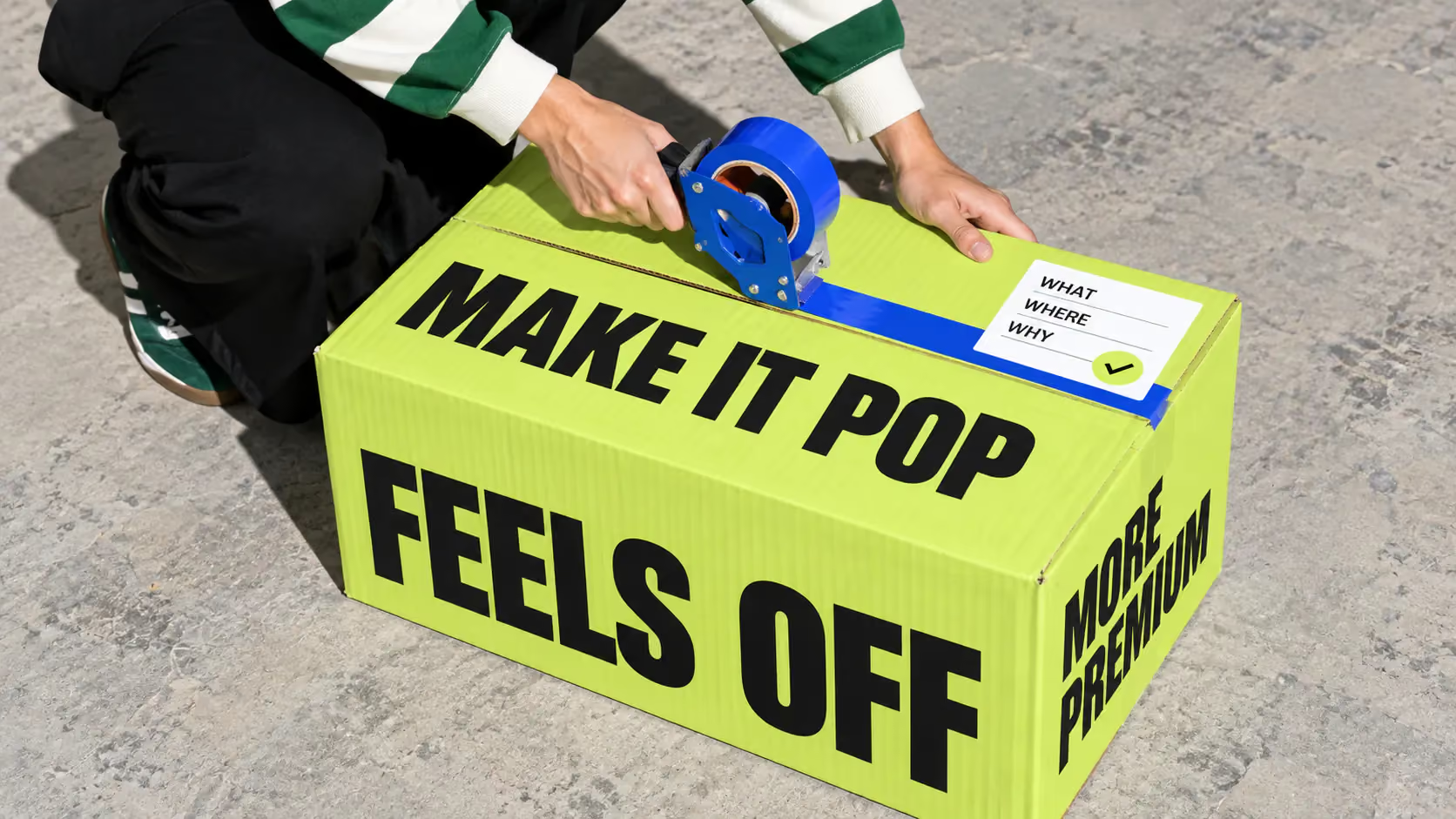
"Make it pop."
"Something feels off."
"Can we make it feel more premium?"
Every designer has heard a note like this and thought: Okay…but what exactly should I change?
The problem usually isn't that the reviewer doesn't know what they want. They can often tell you immediately when something doesn't feel right. What they don't always have is the vocabulary to explain why.
And when that gap shows up in a review, designers end up doing the translation work: chasing clarification, guessing at the problem, and sometimes spending an entire revision round fixing the wrong thing.
The good news is that better feedback doesn't require reviewers to become designers. It requires a better review process - one that helps people turn their reactions into clear, actionable input.
Here are five practical steps for getting feedback that gives designers something they can actually work with, without turning every review into a guessing game.
Step 1: Set expectations before asking for feedback
Vague requests tend to produce vague answers. Before anyone opens the file, tell reviewers what kind of feedback you need, what to focus on, and when you need it.
Sending a link with "Let me know what you think" leaves the door open to everything at once: typos, color preferences, strategic concerns, layout changes, and personal opinions. It also makes the review feel open-ended, so notes tend to arrive whenever someone gets around to them.
Instead, give the review a specific job.
If you're reviewing an early concept, you might say:
"This is still a rough layout, so I mainly want to know whether the flow makes sense. Let's hold off on colors and spacing for now."
If you're further along:
"This version has the final copy and layout in place. I'm mainly looking for anything that makes you question the direction before we lock it."
The same applies to the deadline. Don't just give people a date - explain what their feedback enables. You might say something like, "Can I get your notes by Thursday evening? That gives us enough time to turn everything around before Monday's client call."
That small bit of context makes the deadline feel like part of the process rather than an arbitrary cutoff.
Step 2: Ask what's not working, not what the fix should be
When something feels off to a reviewer, their instinct is often to blurt out a solution.
"Make the logo bigger."
"Try a different color."
"Can you move this over here?"
The problem is that the reviewer is trying to solve a design problem without having all the context the designer has. Their suggested fix might be useful, but it might also address the wrong thing entirely.
Instead, ask them to describe the problem they're experiencing.
A few questions that help:
- "What's the first thing that bothers you when you look at it?"
- "What were you expecting when you first saw this, and what happened instead?"
- "If you had to describe the problem to someone who hasn't seen this, what would you say?"
- "Is the problem with what's here, or with something that's missing?"
This changes the conversation from "Here's what I think you should do" to "Here's what I'm experiencing," which is much more useful for a designer, because it leaves room to find the right solution.
Step 3: When feedback is vague, dig for what's underneath it
Vague feedback doesn't need a translation, it needs a different kind of question. A few ways in tend to work better than just asking "what do you mean":
1. Ask for a reference
"Is there anything, anywhere, that does what you're picturing?"
It could be a competitor's website, an old campaign, another brand, or even a random ad they saw last week. The reference doesn't have to be something the team should copy. Its value is that it gives everyone something concrete to react to. "More like this" is often much easier to understand than "Make it feel more premium."
2. Compare it to something already agreed on.
If there's a mood board, brand guideline, creative brief, or previously approved version, bring it back into the conversation. You can ask, "Does this feel closer to the direction we agreed on, or further away from it?"
That gives the reviewer a fixed point to evaluate against instead of asking them to compare the work with an idea that exists only in their head.
3. Narrow the target.
Walk through the piece section by section instead of asking for a reaction to the whole thing at once. A comment like "something feels off" often collapses into something specific, the header, the spacing, one particular image, once the reviewer isn't being asked to hold the entire piece in their head at the same time.
Step 4: Collect every reviewer's notes before acting on any of them
Don't start revising off the first note that lands - wait until every stakeholder who needs to weigh in actually has.
It's tempting to jump on the first piece of feedback that shows up, open the file and start fixing it… until you get a second, contradicting note an hour later from someone else on the client side.
If two people on the client's team disagree with each other, the right move is to flag the conflict back to them directly and ask them to align by saying something like, "I'm seeing two different directions here. Before we make the change, could you confirm which approach you'd like us to move forward with?"
That keeps the designer out of the role of referee and puts the decision back with the people who own it.
Step 5: Assume positive intent
Feedback can feel personal, especially when it's vague, repetitive, or contradictory - and especially when everyone is working against a deadline. But most of the time, the feedback isn't really about you or your design.
A client asking for another round of tweaks may be anxious about whether the launch will work. They may be worried about getting approval from their boss. They may be second-guessing a decision they made weeks ago.
But none of that necessarily shows up as, "I'm worried this isn't going to work." It shows up as, "Can we try it in blue?"
That doesn't mean every piece of feedback is right or that designers should agree to every request. It means separating the person's concern from the specific solution they're suggesting.
Instead of treating the client as someone being difficult, treat them as someone trying to get comfortable with the outcome. That mindset makes it easier to ask better questions, push back when necessary, and find out what's actually driving the request.
It also makes the rest of the process easier. Setting expectations feels collaborative instead of controlling. Asking for the problem instead of the solution feels curious instead of defensive. Resolving conflicting feedback becomes alignment rather than confrontation.
Turn feedback into a conversation
Ultimately, good feedback isn't about making everyone better at design critique. It's about creating enough structure that people can communicate what they're seeing, feeling, and questioning - and giving the designer enough context to do something useful with it.
So set expectations before the review. Ask for problems instead of solutions. Dig beneath vague reactions. Get stakeholders aligned before revising. And assume the person on the other side of the review is trying to get to the same outcome you are.
Do that consistently, and "make it pop" becomes a conversation instead of a revision request.